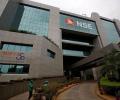
Power Grid was the biggest gainer on the Sensex chart, rising 2.54 per cent, followed by Tech Mahindra, Bajaj Finance, NTPC, UltraTech Cement, Larsen & Toubro, Tata Steel, Bharti Airtel, Bajaj Finserv and HCL Technologies. In contrast, Mahindra & Mahindra, Hindustan Unilever, Infosys and Titan were among the laggards.

'In the past six months, capital markets have seen a dip, and realty is struggling. The stock-market investor will be cautious of putting that investment in real estate when there may be a slowdown coming.'

India's stock markets corrected recently but foreign money is likely to chase China rather than India in the short-to-medium term, said Chris Wood, global head of equity strategy at Jefferies, on Thursday. Wood told the Business Standard Manthan Summit in New Delhi he is bullish about Indian equities from a long-term perspective, but for the short term he is cautious given the quantum of foreign investor (FII) outflows and valuation woes.

Nestle surged 4.25 per cent after the FMCG major reported 4.94 per cent increase in net profit at Rs 688.01 crore for the quarter ended December 31, 2024. IndusInd Bank, Titan, Tata Motors, Tata Steel, ITC and Maruti were the other major gainers. ITC Hotels, Bharti Airtel, Bajaj Finserv, Bajaj Finance and ICICI Bank were among the laggards.
From the Sensex pack, Bajaj Finserv, IndusInd Bank, NTPC, Larsen & Toubro, UltraTech Cement, Adani Ports, Bajaj Finance, Power Grid, Zomato, State Bank of India, HDFC Bank and Titan were the biggest gainers. Tata Motors tanked over 5.5 per cent after US President Donald Trump announced he would impose 25 per cent tariffs on imported cars. Sun Pharma, Kotak Mahindra Bank, Bharti Airtel, HCL Tech and Mahindra & Mahindra were also among the laggards.

'The biggest near-term risk to Indian equities is the outflow of investments to China as tactical trades by foreign investors.'

The exodus of FPIs from the Indian equity markets continues unabated, as they withdrew Rs 64,156 crore ($7.44 billion) this month so far on depreciation of the rupee, rise in the US bond yields and expectation of a tepid earning season. This came after an investment of Rs 15,446 crore in the entire December, data with the depositories showed.

Information technology (IT) stocks ended at their lowest in nearly nine months after a fresh bout of selling, triggered by concerns over a recession in the US, the key market for domestic software exporters. A report by Morgan Stanley citing risks to growth also weighed on sentiment.

Foreign investors have pulled out Rs 44,396 crore from Indian equities this month, driven by strength of the dollar, rising bond yields in the US, and expectations of a weak earnings season. This came following an investment of Rs 15,446 crore in the month of December, data with the depositories showed.

The tide of startup-funding is turning in India, with a rising trend of overall funding while the deal sizes grow bigger. However, the spotlight now is on late-stage startups, many of which are seen to be headed for initial public offerings (IPOs). Record surge in stock markets and consistently improving performances of listed startups are understood to have turned the sentiment for the better, especially for those that exhibit a clear path to an IPO.

Seven consecutive sessions of decline in the equity market has eroded the wealth of investors by a whopping Rs 10.42 lakh crore and the benchmark Sensex has tumbled more than 2,000 points during this period. Concerns over more rate hikes by developed economies, weak global equity markets and fresh foreign fund outflows from the domestic market have dented investor sentiments. On Monday, the BSE Sensex dropped 175.58 points or 0.30 per cent to end at 59,288.35 points, marking a decline for seven straight trading sessions.

From the 30-share blue-chip pack, Adani Ports, UltraTech Cement, Larsen & Toubro, Sun Pharma, HDFC Bank, ICICI Bank, NTPC and State Bank of India were the major laggards. Tata Consultancy Services, Reliance Industries, ITC, Asian Paints, HCL Tech and Maruti were among the gainers.

On average, stocks that debuted last year are down 37 per cent from their peak levels.

From the Sensex basket, Infosys, IndusInd Bank, Bajaj Finserv, Wipro, HCL Technologies, Bajaj Finance, Tech Mahindra, Tata Consultancy Services, and Larsen & Toubro were the major laggards. Titan Company, Hindustan Unilever, HDFC Bank, Maruti, ITC, Power Grid and Reliance Industries were the gainers.

Indian investors have emerged as the most optimistic lot in Asia and along with their Chinese counterparts have driven an increase in the region's overall investor sentiment in the first quarter of this year, a latest survey says.
From the Sensex pack, Nestle India, HCL Technologies, Tech Mahindra, Bharti Airtel, Titan, Infosys, Asian Paints, NTPC, Bajaj Finserv and Sun Pharmaceuticals were among the laggards. State Bank of India, IndusInd Bank, Zomato, Power Grid, ICICI Bank, Tata Motors, Mahindra & Mahindra, Tata Consultancy Services and Adani Ports were the gainers.

Redemptions from systematic investment plan (SIP) accounts scaled a new high of Rs 14,367 crore in July, indicating investors booked profits following back-to-back months of gains in the market. Volatility triggered by Budget announcements also played on investor sentiment. "July 2024 saw a peak in the Nifty, which may have prompted profit-booking among investors nearing the end of their goal tenure.

Following the Reserve Bank of India's (RBI's) action against Paytm Payments Bank, participants in the fintech ecosystem have turned their attention to giving priority to compliance with regulatory norms. Fintech industry players say the episode will ensure adherence to such measures. Executives Business Standard spoke to said companies should have clarity on their requirements.

Bajaj Finance, Bajaj Finserv, NTPC, State Bank of India, Power Grid, HDFC Bank, Tech Mahindra and Asian Paints were the other gainers. However, Zomato, Adani Ports, Tata Consultancy Services, Mahindra & Mahindra, Maruti and Tata Motors were among the laggards.

Institutional investments in Indian real estate have seen a strong start to 2025, with inflows reaching $ 1.3 billion in the first quarter - a 31 per cent year-on-year (YoY) increase. This growth was primarily driven by domestic investments, which accounted for 60 per cent of the total inflows during the quarter. With $ 0.8 billion inflows, domestic investments saw a 75 per cent annual rise and were largely focused on industrial & warehousing and office segments.

The last time this happened was in 1996.

Equity mutual fund (MF) schemes have raked in Rs 46,200 crore in net lump-sum inflows in the past six months (ended February 2024), almost thrice the inflow in the previous six-month period.

India's biggest telecom players, Bharti Airtel and Reliance Industries-backed Jio Platforms, will soon bring billionaire Elon Musk-led SpaceX's Starlink satellite services to India. According to analysts, the move could boost India's tele density, especially in the rural areas, and may be an opportunity for investors to add the two stocks on dips for long-term gains

From the 30-share blue-chip pack, IndusInd Bank, NTPC, UltraTech Cement, Sun Pharma, Axis Bank, State Bank of India, Tata Steel, Power Grid, Adani Ports and Kotak Mahindra Bank were among the major laggards. Tata Consultancy Services jumped nearly 6 per cent after the IT services company reported an 11.95 per cent jump in the December quarter net profit to Rs 12,380 crore. Tech Mahindra, HCL Tech, Infosys and Bajaj Finserv were the other big gainers.
From the Sensex pack, Zomato, HDFC Bank, Tech Mahindra, Adani Ports, Tata Consultancy Services, ICICI Bank, Sun Pharma, Larsen & Toubro, HCL Tech and ITC were the major laggards. On the other hand, Tata Motors, Nestle, Titan, Hindustan Unilever and Reliance Industries were among the gainers.

A sharp correction in stock prices, signs of rural recovery, and lower raw material costs have not been enough to change brokerages' cautious stance on the top-listed paint companies. Concerns over rising competition and weak demand continue to weigh on sentiment.

The BSE mid-cap and small-cap stocks have outperformed the benchmark Sensex in 2023-24 with about 62 per cent returns, reflecting buoyant investors' sentiment amid robust macroeconomic conditions in the country and impressive quarterly earnings reported by various firms. As per an analysis, the BSE mid-cap gauge jumped 15,013.95 points or 62.38 per cent in the 2023-24 fiscal, while the small-cap index climbed 16,068.99 points or 59.60 per cent. In comparison, the 30-share BSE Sensex raked in a gain of 14,659.83 points or 24.85 per cent during the fiscal under review.

Investors have lost over Rs 5.55 lakh crore in four days of declines in the domestic equity markets. Rising domestic COVID-19 cases and selling in RIL and banking stocks dragged down the 30-share BSE Sensex by 562.34 points or 1.12 per cent to 49,801.62 on Wednesday. In four days, the benchamark has fallen by 1,477.89 points or 2.88 per cent. The market capitalisation of BSE-listed companies has tanked by Rs 5,55,400.52 crore in four days to reach Rs 2,03,71,252.94 crore.
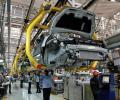
Automobile retail sales in India rose 6 per cent to 2,61,43,943 units in FY25 with rural areas performing better than urban regions across passenger vehicle and two-wheeler segments, dealers' body FADA said on Monday. The last financial year saw growth in sales of passenger vehicles, two-wheelers and three-wheelers.

Among the Sensex firms, ICICI Bank and SBI led the index with the maximum gains of 4.68 per cent and 3.99 per cent, respectively. Other major gainers were Larsen & Toubro, Kotak Mahindra Bank and HDFC Bank. On the other hand, Wipro and Tata Motors defied the trend and traded in negative.

RBI's interest rate decision, quarterly earnings and global cues would be the major driving factors for equity markets this week, analysts said adding that the impact of the Union Budget could linger on this week. Trading activity of foreign investors will also be a key driver for the markets, experts noted. "US and India's manufacturing PMI for January to be released on Monday, will be the key macro data to watch out for.

India's flexible (flex) office segment, having breached pre-pandemic levels, is thriving as corporates, startups, multinational corporations, and global capability centres (GCCs) expand in India, seeking low-capital yet Grade A plug-and-play facilities. In the first quarter (Q1) of 2025, the flex office segment continued to grow, with flex space leasing rising by 22 per cent to 2.2 million square feet (msf), according to Colliers.

'If the majority falls short of expectations, it may prompt initial adjustments in investor sentiment.'

Among 30 Sensex shares, Zomato tanked over 5 per cent. Tata Steel, Bajaj Finserv, Tata Motors, Power Grid, Larsen & Toubro, Kotak Mahindra Bank, Hindustan Unilever and ITC were the biggest laggards. Bharti Airtel was the only gainer among Sensex scrips.

From the 30-share blue-chip pack, Larsen & Toubro rallied nearly 5 per cent. Adani Ports, IndusInd Bank, Tata Motors, Reliance Industries, UltraTech Cement and Asian Paints were also among the major gainers. ITC Hotels, Zomato, Nestle and Maruti were among the laggards.

HDFC Bank was the top gainer in the Sensex pack, rallying over 4 per cent, followed by SBI. IndusInd Bank, ICICI Bank, Axis Bank and HDFC were also among the gainers. NSE Nifty soared 269.25 points to 15,175.30.

Equity markets this week will take cues from global trends, trading activity of foreign investors and quarterly earnings, with TCS kick-starting the results calendar on Thursday, analysts said.

From the 30-share Sensex pack, Bajaj Finance, Nestle India, Bajaj Finserv, Asian Paints, UltraTech Cement, Infosys, Maruti, Bharti Airtel and Hindustan Unilever were among the gainers. JSW Steel, Adani Ports, NTPC, State Bank of India, Reliance Industries, Tech Mahindra, Axis Bank, Titan and HDFC Bank were the laggards.

From the 30 blue-chip pack, Mahindra & Mahindra, IndusInd Bank, Bajaj Finance, Tata Motors, Bajaj Finserv, Nestle and ICICI Bank were the biggest gainers. State Bank of India, Tata Steel, Adani Ports, Zomato, UltraTech Cement and HCL Tech were among the laggards.

Real estate developers are hoping that the slew of tax concessions announced in Union Budget 2025, set to take effect this financial year, will spur demand for affordable and mid-segment housing, even as the broader housing market shows signs of fatigue.
 © 2026 Rediff.com - Advertise with us - Disclaimer - Privacy Policy - Sitemap - Feedback - About us - Terms of use - Grievances